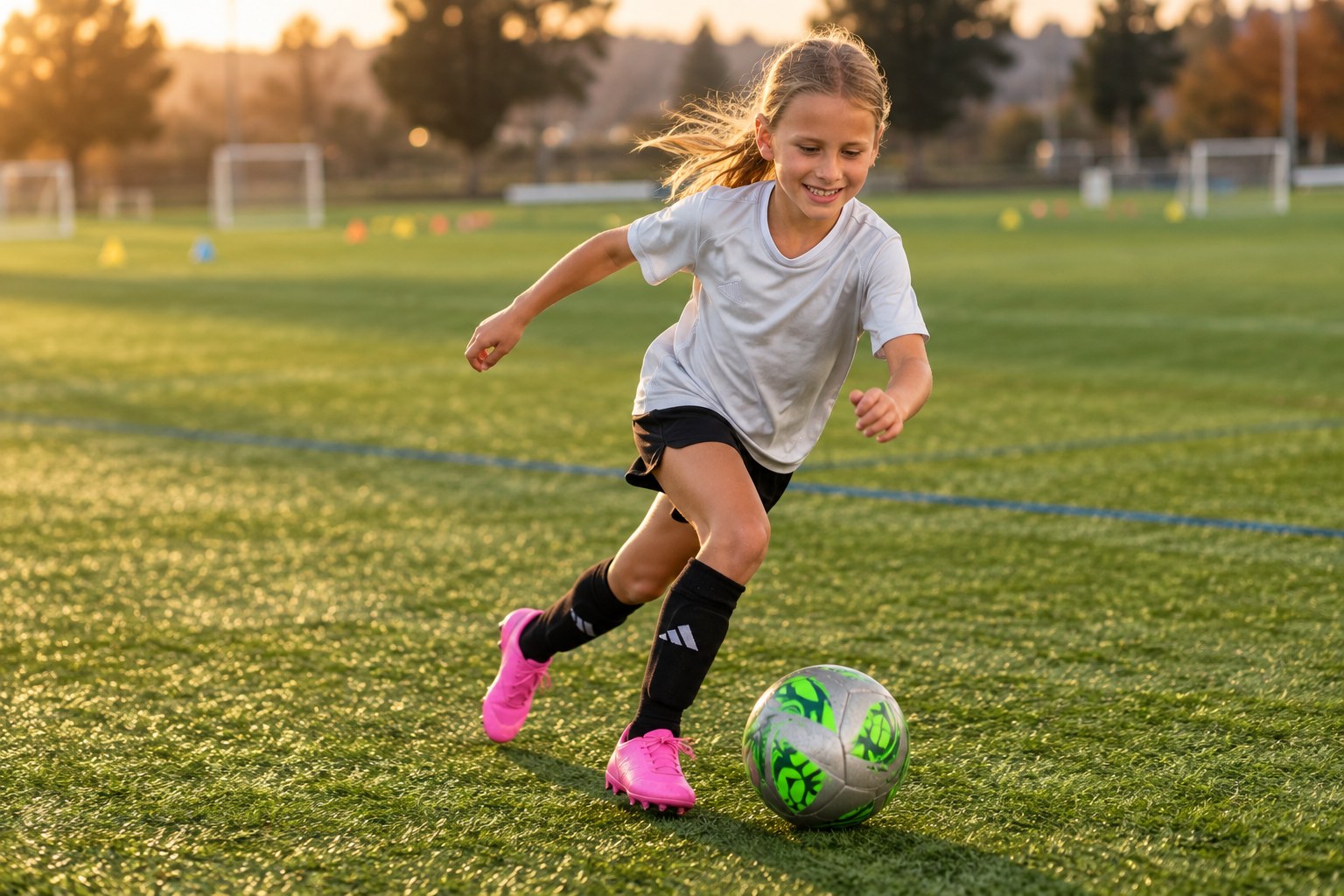
Soccer practice at home · ages 8–12
Watch it.
Copy it.
Own the ball.
Quick soccer moves shown by kids just like you. Grab a ball, press play, and practice on your own — no team needed.
How it works
Your own practice, anytime
Pick your moves
Short 15–20 second clips of kids showing toe taps, cuts, juggling, fast feet and more. Watch one and you’ve got it.
Make a plan
With a grown-up, line up the drills you want and choose how long each one lasts.
Press play & copy
Prop up the phone or iPad. Each move loops with a big timer and a beep when it’s time to switch.
Youth development
Ball mastery builds confidence on and off the field
Between 8 and 12, kids are quietly deciding whether they are “a soccer player” or not. What tips the scale is not speed or size — it is how the ball feels at their feet. When it feels like theirs, they play with their head up, try the harder thing, and keep going when it gets tough.
Comfort at their feet
When a kid can tap the ball, stop it, and roll it out of their feet without looking down, the game stops being a scramble. They start looking up, seeing space, and playing instead of chasing.
Confidence that carries over
Learning a hard move teaches the same lesson as learning to read or ride a bike: hard things get easier when you keep trying. That belief shows up in class, at practice, and everywhere else.
Growth follows comfort
Once the ball feels friendly, kids reach for the harder thing — the weak foot, the faster dribble, the trick they just saw. That is where real growth starts, and it starts with easy reps at home.
Why at-home training matters
Practice gives them a plan. Home gives them the reps.
One or two practices a week is not enough for a kid to feel comfortable with the ball — there is too much waiting in line. Ten minutes in the backyard, driveway or living room, three times a week, adds up to more touches than a whole practice, with no pressure and nobody watching.
- More touches, faster. Ten minutes at home can mean hundreds of extra touches on the ball.
- No lines, no waiting. They can try a move ten times and nobody is watching them miss.
- It becomes a habit. A short session after homework beats one long session on the weekend.
- They learn to coach themselves. Watch it, try it, fix it — that skill works in school too.
What most kids work on at each age
8–9
Keeping the ball close, using both feet, slow touches with the head up.
10–11
Quicker feet, first tricks, using the weaker foot without thinking about it.
12
Moving fast with the ball, a first touch that sets up the next move, deciding under pressure.
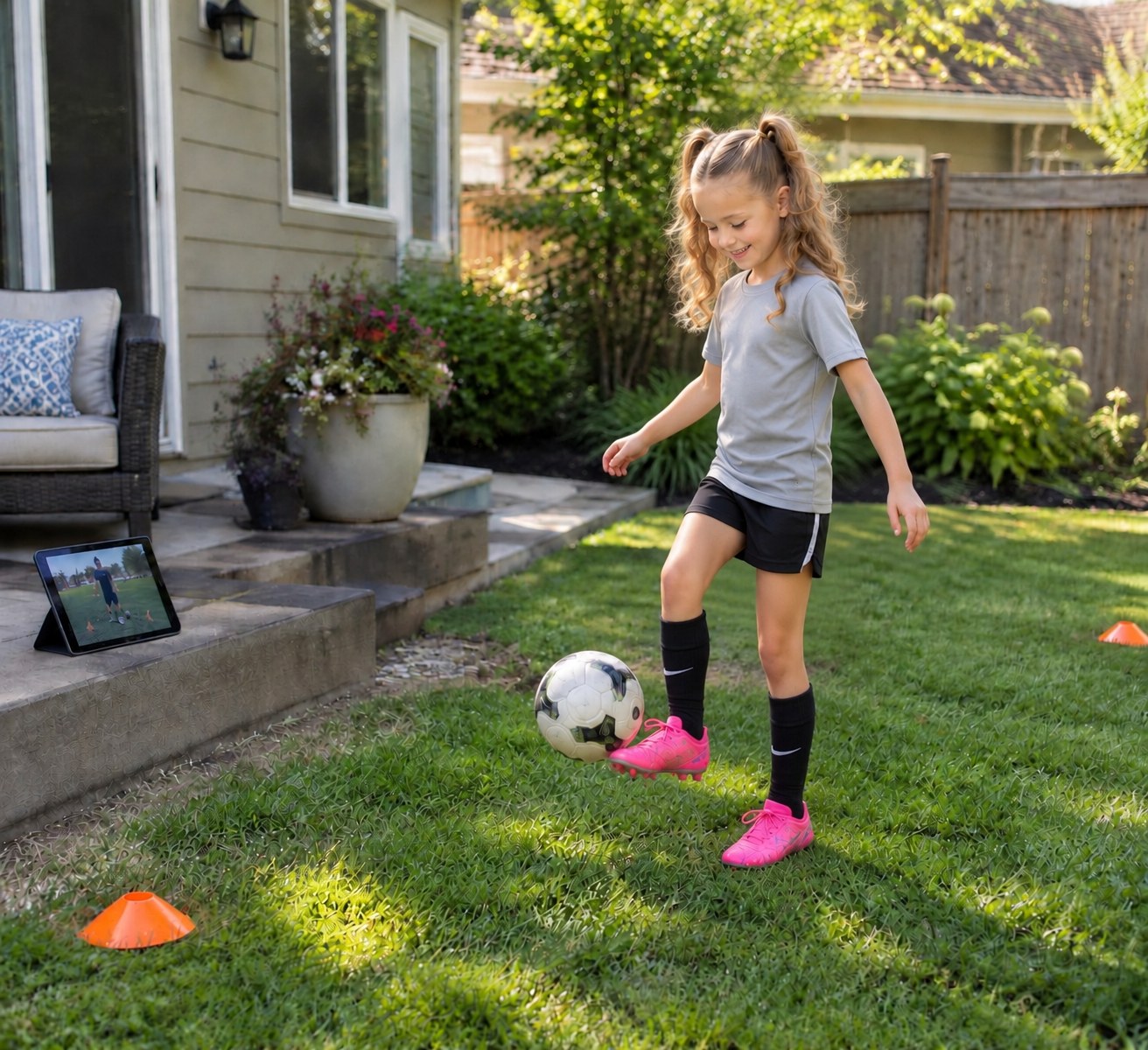
Backyard · driveway · living room
All you need is a ball and a little space
Set the phone or iPad where you can see it. The video shows the move, a voice says “Go!”, and the timer counts down. When it beeps, take a quick rest and get ready for the next one.
Parents: set it up once
Make a free account, build a training plan, and your player can start it any time from your phone or tablet.
Create a free account